


Atlantic Atlantic Mariner Wave Automatic Black & Rose Gold Dial on Rubber 81771.43.69RPU
Atlantic Mariner Wave Automatic Black & Rose Gold Dial
2 to 3 WEEK DELIVERY
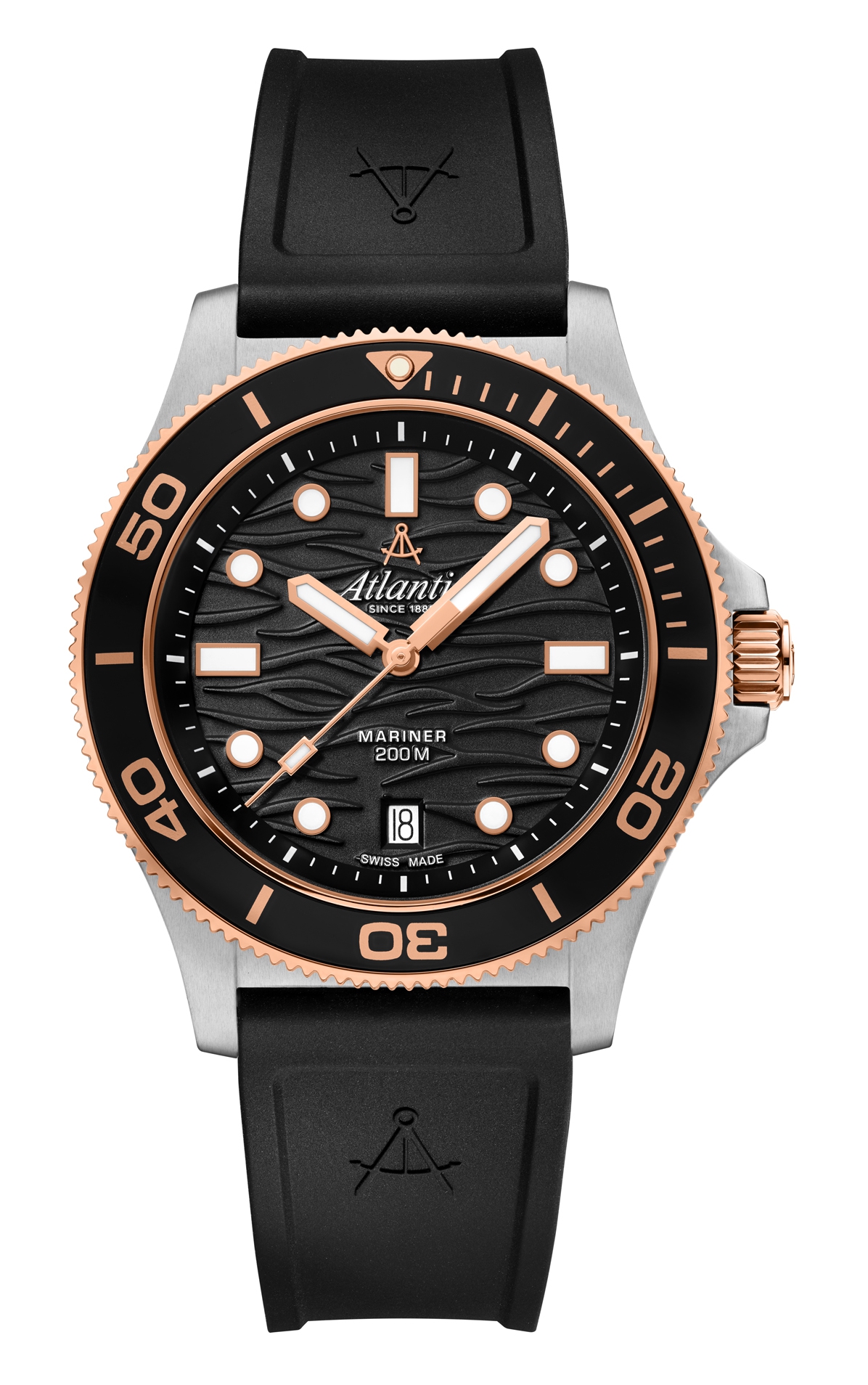
There’s a quiet energy in the Mariner Wave Automatic. Its dial catches the light like water in motion. Subtle, alive, effortless. The 42 mm steel case feels solid and reassuring, while the Swiss automatic movement keeps perfect rhythm inside. Strong enough for the sea. Refined enough for every day.
There’s something effortlessly magnetic about the Mariner Wave Automatic. The way light glides across its dial. The reassuring weight when it settles on your wrist. The design carries the calm of the sea. A refined wave pattern moves gently with the light, reminding you that time, like water, never stands still. Subtle, alive, always in motion. Strength and calm live side by side here. The Mariner Wave Automatic is confident without show, precise without pretense. It feels right in every setting — by the coast or in the city, in silence or in motion.
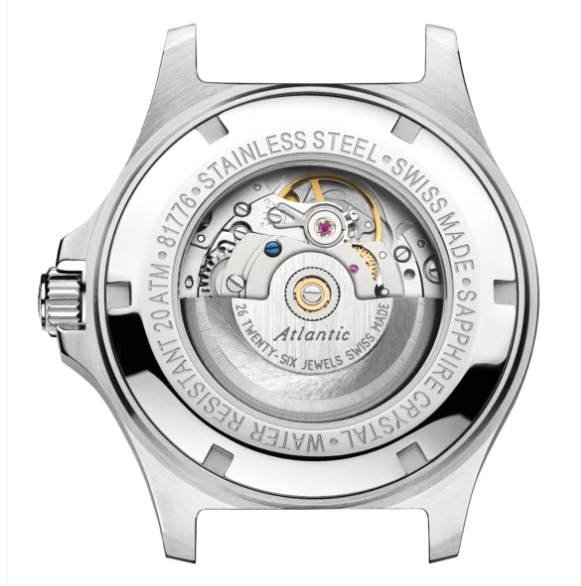
Movement Sellita SW 200-1
Case Material Stainless Steel
Case Diameter 42mm
Caseback Transparent caseback
Crown Screw-in crown, Rose gold PVD
Bezel Turning Diver's Bezel, Accents in rose gold
Dial Black Color, Rose Gold Accents, Date display at 6H, Hands with Superluminova®, Indices filled with Superluminova®, Wave design in 3D-Structure
Crystal Sapphire Crystal
Bracelet High Resistant PU Strap
Water Resistance 200 meters | 20 bar
Reference 81771.43.69RPU
Key Characteristics




Additional Product Details
History and Heritage of Atlantic Watches The Atlantic company was established in Bettlach, a village near Grenchen Switzerland, in 1888. It was founded by Eduard Kummer, born March 26, 1845. He was one of the founders of Swiss watchmaking. During his many years of apprenticeship and further education in the Swiss Jura, he constantly refined his skills as a watchmaker. He came back to his native city as a qualified master of horology. The citizens of Bettlach recognized Kummer’s business ambitions and supported the establishment of the industry, which soon became the heart of Swiss watchmaking. The vision of setting up a high-quality watchmaking business became true. In 1888, 15 to 20 employees worked in the first workshop. Over the subsequent years the factory developed steadily, reaching 720 employees before the end of the 19th century. Although Eduard Kummer was known as very traditional, he believed strongly in the development of the watch industry. At that time, the workweek lasted 6 days and 11 hours per day. There was no such thing as paid vacation nor extra wages. The introduction, in 1937 of 6 days of paid vacation per year at EKB was a social breakthrough. The company was originally called EKB (short for Eduard Kummer Bettlach). Initially the company manufactured parts for such renowned watch producers as Longines, Certina, and many others. The first watches under the name of “Atlantic” with a sextant as a logo were released in 1932, including one of the first waterproof chronographs. The invention of the “Speed Switch” in 1960 sets a milestone in the watchmaking history. The innovation allowed the date to switch 52 times faster than before. By selling this innovation to other watch manufactures, Atlantic clearly demonstrated its watch making skills. Atlantic flagship models are from the “Worldmaster” family. With this piece, the company achieved a high degree of recognition and the models are still today regarded as the brand’s identification mark. The traditional “Worldmaster” is however constantly upgraded to stay timeless. In the past, the Atlantic watches were aimed at strong personalities, who always pursued their goals and were represented in a high price range. Today, Atlantic has a wide range of watches, distinguished by their high quality, in a middle price segment. In addition to the timeless “Worldmaster”, Atlantic offers a wide selection of sporty, classic and elegant watches. However, what distinguishes the traditional models is their unique and specific Atlantic look.